
SIP trunking is a communication technology that connects a business’s phone system to the internet instead of traditional phone lines. It allows voice, video, and messaging to run over a single digital connection, reducing the need for costly physical circuits. SIP trunking continues to matter because businesses increasingly depend on flexible, scalable, and cost-efficient communication systems that can adapt to hybrid and remote operations.
In contrast to old phone systems that rely on fixed hardware, SIP trunking uses internet-based sessions to handle multiple calls simultaneously with improved quality and lower maintenance costs. It also integrates smoothly with modern cloud PBX and collaboration tools.
We have carefully evaluated 35+ SIP providers using the reviews from Gartner, G2 and other social media platforms. Therefore, we identified the top 10 SIP trunking providers for 2025, based on performance, reliability, features, and overall value. It gives businesses clear guidance on cost, call quality, and scalability.
Get the Best SIP Trunk for Your Setup
Share your call volume and PBX type — we’ll recommend the best SIP trunk provider for your business.
Comparison Table of Top SIP Trunking Providers
| Provider | Starting Price | Key Features | Best For | Badge |
|---|---|---|---|---|
| Twilio | From $0.005/min | Global coverage, developer-friendly APIs, scalable channels, detailed analytics | Custom integrations & app developers | Best for Developers |
| Bandwidth | Custom (volume-based) | Direct-to-carrier reliability, E911 compliance, global PSTN access | Large enterprises needing compliance | Best for Enterprise |
| Nextiva | From $24.95/channel | Unlimited US calling, simple setup, strong support | SMBs wanting predictable costs | Best for Small Businesses |
| RingCentral | From $19.99/user | Unified platform, Microsoft Teams integration, HD call quality | Hybrid teams using UC tools | Best Unified Solution |
| Vonage | From $19.99/line | Call routing, CRM integrations, flexible scaling | Businesses needing high concurrency | Best for High Call Volume |
| 8x8 | From $25/user | SIP + UC platform, analytics dashboard, international calling | Mid to large companies needing UCaaS | Best UC Integration |
| Plivo | From $0.0065/min | Voice + SMS API, global network, transparent billing | Global businesses & SaaS platforms | Best for Global Workflows |
| Telnyx | From $0.005/min | Programmable SIP trunks, TLS/SRTP security, intelligent routing | Tech-oriented firms & ISPs | Best Programmable SIP |
| Flowroute | From $0.0055/min | Direct network access, fraud prevention, BYOC flexibility | IT teams needing carrier control | Best for Network Control |
| SIP.US | $24.95/month/channel | Unlimited channels, simple portal, predictable billing | Cost-focused businesses | Best Value Option |
Want a Shortlist Based on Your Needs?
We’ll narrow it down to the top 3 options based on uptime, pricing model, and integrations.
Top 10 SIP Trunking Providers

Twilio offers SIP trunking that connects business phone systems with the internet. It supports global communication and eliminates the reliance on physical lines. The system adjusts capacity automatically as call traffic grows. This helps businesses reduce costs and maintain reliable communication across locations without complex technical management.
Key Features
Twilio includes automatic scaling, number management, and smart call routing. Performance is efficiently tracked by call recording and real-time analytics. The system has strong global coverage with multiple data centers for stability. Effective business management is offered through Twilio’s dashboard or APIs for better visibility and quick adjustments.
Integrations
- Microsoft Teams, Zoom, and Salesforce are easily integrated with Twilio.
- It also integrates with PBX Phone System and CRM tools through APIs.
- Manage calls, track data, and store records within their existing systems.
Pros and Cons
- Twilio provides granular programmability and strong observability
- Straightforward to instrument and automate voice operations at scale
- Realizing the platform’s full capabilities typically requires developer resources
- Usage-based pricing can amplify costs under sustained high traffic
Pricing Breakdown
- Outbound calls start at $0.005 per minute.
- Inbound rates depend on the destination country.
- There are no setup or contract fees.
- Billing is based on actual use, helping small and large firms control spending.
- Discounts are available for high call volumes or enterprise-level agreements.
Best For
Twilio is ideal for developers, SaaS platforms, and global businesses. It works best for organizations that want full control over voice systems. It also helps companies that rely on analytics or custom integrations. Twilio supports both small-scale testing and large-scale global communication with consistent reliability.
Unique Selling Point (USP)
Twilio’s strength lies in its programmable control. Businesses can design, scale, and monitor calls through code or dashboards. This flexibility removes hardware limits and allows seamless integration into existing tools. It gives growing companies a stable foundation for efficient and automated communication worldwide.

Bandwidth delivers SIP trunking with direct-to-carrier connections. It bypasses intermediaries, so voice traffic goes straight to the network. This improves call quality and control. Businesses rely on Bandwidth to meet compliance and to reduce latency in voice delivery across regions without adding extra infrastructure.
Key Features
Bandwidth offers direct routing, E911 support, number porting, and traffic redundancy. It provides real-time dashboards, call recording, and quality monitoring. Global PSTN access ensures reach across many countries. It also supports failover paths to maintain continuity during disruptions.
Integrations
APIs for programmatic management of numbers, call flows, and messaging and offers interoperability with unified communications platforms such as Microsoft Teams and major PBX vendors. Such capabilities in integration allow enterprise systems to automate provisioning and synchronize call metadata with business applications.
Pros and Cons
- Enhanced control over call paths and regulatory features
- Lower-latency routing
- Stronger compliance support
- Daunting configuration and onboarding process
- Need for technical validation during integration and testing
Pricing Breakdown
- Bandwidth uses volume-based pricing and custom quotes.
- No fixed per-minute rate published publicly.
- Contact sales to get pricing based on call volume, region, and usage patterns.
- Suitable for high callers but can lack predictability for mid or low usage.
Best For
Bandwidth is best for large enterprises and high-volume users that need direct carrier access, regulatory compliance, and top-tier call stability. It fits businesses that operate across regions and must meet communication standards like E911 and low-latency voice delivery.
Unique Selling Point (USP)
Bandwidth’s USP is its direct-to-carrier architecture and ownership of core network elements, which reduces intermediary hops and gives customers tighter control over voice routing, latency, and compliance.

Nextiva delivers SIP trunking within a cloud communications environment that emphasizes simplified operations and predictable costs. The service centralizes trunk and user management in a single platform designed to lower the technical barrier to adopting VoIP Ph, providing continuity and consistent voice performance for small and mid-market enterprises.
Key Features
The Nextiva platform includes adaptive bandwidth allocation, centralized administrative dashboards for trunks and call policies, monitoring tools that surface latency and packet loss, and automated failover mechanisms to preserve continuity during network incidents. Security controls and authentication measures are included to protect signaling and media flows.
Integrations
Nextiva connects with CRM platforms, Microsoft Teams, and Slack. It also works with major PBX and contact center systems. Its integration layer lets organizations streamline workflows between voice data and customer management systems.
Pros and Cons
- Easy to setup (Not much technical overheads)
- Strong support team
- Transparent pricing, and predictable costs
- Limited global coverage compared
- Some advanced routing features are missing
- Less flexible for deep customization than API-first systems
Pricing Breakdown
- Starting from $24.95 per SIP channel
- Pricing scales with additional channels or features.
- No per-minute charges within the U.S. for included voice traffic.
- International calling may incur extra costs.
Best For
Nextiva suits small to medium businesses that want solid voice services without heavy technical oversight. It is ideal for teams that need reliability, predictable costs, and support rather than full customization or international complexity.
Unique Selling Point (USP)
Nextiva’s distinguishing characteristic is its emphasis on operational simplicity, combining managed support, clear channel-based pricing, and a single management surface to accelerate VoIP adoption for non-specialist teams.

RingCentral offers SIP trunking as part of its unified communication platform. It merges voice, messaging, and video under one service.
Centralization of all channels significantly simplifies communication in business setups. Hybrid teams operate from a single interface to manage calls and collaboration tools.
Key Features
RingCentral’s service offers dynamic session and capacity management, global routing with regional edge points to reduce latency, integrated disaster recovery and automatic rerouting, and a monitoring suite that reports on call quality and traffic patterns. The platform also incorporates unified messaging and conferencing capabilities alongside SIP services.
Integrations
RingCentral provides deep integration with productivity and CRM ecosystems, including Microsoft Teams, Google Workspace, Salesforce, and Zendesk, and exposes APIs for automation of call control and logging. These integration points facilitate synchronized user experiences and consolidated operational analytics.
Pros and Cons
- Cohesive communication across channels
- Strong interoperability with enterprise systems
- Simplified administration for organizations that need a single platform
- Higher total cost when advanced UC bundles
- Less modularity for teams that want only raw SIP trunking without the additional collaboration features
Pricing Breakdown
- Starts at around $19.99 per user.
- Pricing depends on plan levels and feature bundles.
- You have to pay extra for International calling or advanced features
- Pricing is best if your business voice is part of a larger unified communications setup.
Best For
RingCentral is best for organizations that require integrated voice, video, and messaging capabilities, particularly hybrid or distributed teams that benefit from consistent tooling across collaboration and telephony.
Unique Selling Point (USP)
RingCentral’s USP is its integrated communication ecosystem. Voice, messaging, and collaboration live under one roof. This means fewer systems to manage and a consistent user experience across tools. For companies that want voice and team tools in a single platform, this cohesion delivers real operational simplicity.

Vonage offers SIP trunking built for businesses handling high call volumes. It supports flexible routing and integration with customer engagement systems. Vonage helps companies manage complex voice flows and scale call capacity. It emphasizes handling heavy traffic without compromising on control or responsiveness.
Key Features
Vonage supports elastic scaling of concurrent sessions, redundant routing infrastructure designed for high availability, Session Border Controller (SBC) options for secure protocol termination, and comprehensive call detail records for operational and financial analysis. The platform also provides encryption and access controls to protect call signaling and media.
Integrations
Vonage integrates with CRM and contact center systems, including Salesforce and Zendesk, supports SIP interoperability with major PBX vendors such as Avaya and Cisco, and exposes APIs that allow developers to automate routing, telemetry collection, and call handling workflows.
Pros and Cons
- Handles high call loads
- Strong routing controls
- Supports workflow integrations
- Pricing structure is complicated
- Setup takes significant effort
- International coverage is not as broad
- Some users report delays with support
Pricing Breakdown
- Vonage pricing begins at $19.99 per line, and varies widely by usage and region.
- Location and traffic patterns mainly decide the calling rates.
- Contracts and volume commitments may reduce costs.
- Users should verify international and excess usage charges.
Best For
Vonage is best for contact centers, large teams, and businesses with high call throughput. It fits organizations that require complex routing, capacity scaling, and integration with customer systems. Companies with heavy voice demands benefit the most.
Unique Selling Point (USP)
Vonage’s USP lies in its high-throughput routing and integration capacity. It supports complex call traffic patterns and scales to large volumes. Its tight integration capabilities allow businesses to bind voice operations to customer engagement tools for seamless workflows in busy environments.

8×8 offers SIP trunking integrated into its communications platform. It merges voice with messaging, conferencing, and analytics. Businesses choose 8×8 to unify all communication channels. It reduces system sprawl and simplifies operations for mid-size to large organizations.
Key Features
8×8 supports HD voice, call routing, analytics dashboards, failover, and global calling. It also adds team chat with chatbot systems, video conferencing, and contact center features. The analytics component helps teams track call metrics and usage trends.
Integrations
8×8 connects to Microsoft Teams, Salesforce, Zendesk, Slack, and more. It also integrates with PBX systems and CRMs. The integration frameworks enable data sharing across communication and business systems.
Pros and Cons
- It’s a complete unified communication solution
- Strong analytics
- Global voice coverage
- Pricing can be steep
- Some users may not need full UCaaS features
- Bundled nature can limit the modular use of pure SIP features
Pricing Breakdown
- 8×8 starts from $25 per user
- Voice, meeting, and contact center options may raise fees.
- International calling often adds cost.
- The all-in-one pricing suits teams that want unified services over piecemeal solutions.
Best For
8×8 is best for mid to large businesses wanting a unified communications platform. It fits organizations that prefer integrated voice, messaging, and collaboration under one system rather than managing multiple vendors.
Unique Selling Point (USP)
8×8’s USP is its all-in-one communications suite with built-in SIP trunking. Several integrations under one platform to support smooth business operation. It unites voice, video, chat, and analytics in a single service. This coherence reduces vendor complexity and delivers a consistent user experience across communication modes.
Not Sure Which Provider Fits?
Get expert guidance on call routing, concurrency, and real-world costs before you commit.

Plivo delivers SIP trunking and programmable voice services to businesses worldwide. Its scalable voice and SMS APIs enable companies to integrate voice capabilities into applications and systems without the need to handle telephony infrastructure. This allows for adaptable voice functionality across different markets.
Key Features
Plivo provides programmable call flows, SMS integration, automatic call recording, call forwarding, and detailed real-time logs. Its routing framework includes multiple failover options and region-specific redundancy to ensure stable voice quality worldwide. The management console delivers transparency through per-call metrics and billing data.
Integrations
Plivo works with CRMs, PBX systems, and cloud platforms like AWS. It connects via APIs to business systems for voice-based automation. This lets developers embed calling and messaging into workflows without separate telecom management.
Pros and Cons
- Exclusively transparent billing
- Most flexible APIs
- Global reach
- Unified voice/SMS support
- You can design workflows around communication
- Setup may require developer support
- International voice quality differs by region
- Advanced telecom features are limited
Pricing Breakdown
- Plivo starts at $0.0065 per minute for outbound calls.
- Inbound rates vary by country.
- SMS pricing is separate.
- There are no lock-in fees.
- Usage-based billing gives transparency
- Heavy international traffic may increase costs.
Best For
Plivo fits global SaaS platforms, developers, and businesses that need voice and SMS in one stack. It supports use cases where voice actions tie into software logic and workflows. Organizations with tech capacity to manage APIs benefit most.
Unique Selling Point (USP)
Plivo’s USP is its combined voice and SMS API platform with transparent billing. It allows companies to build voice, messaging, and telephony into software with a singular framework. Transparent pricing and centralized control make it attractive for teams overseeing global communication workflows.

Telnyx provides programmable SIP trunking with secure routing and global coverage. Additionally, it supports voice, messaging, and real-time analytics. Companies use Telnyx to build automated voice systems and manage traffic across regions. Its infrastructure supports consistent performance as operations scale.
Key Features
Telnyx includes TLS/SRTP encryption, intelligent routing, call recording, number management, and redundancy. It offers global coverage with direct access to many local markets. Real-time dashboards and APIs help monitor usage and performance.
Integrations
Telnyx integrates with CRM systems, PBX platforms, Microsoft Teams, and application backends via APIs. In addition, it is seamlessly integrated with analytics and communication platforms. These integrations allow seamless flow between call data and business processes.
Pros and Cons
- Telnyx provides high security
- Strong developer control
- Wide international reach
- Setup and ongoing configuration demand technical expertise
- Regional quality can vary depending on local carrier availability
Pricing Breakdown
- Starts at $0.005 per minute for outbound calls.
- Inbound rates vary per country.
- There are no setup fees or minimums.
- Usage-based billing allows cost flexibility.
- Volume discounts exist for high-use customers.
Best For
Telnyx best suits tech teams, developers, and growing enterprises. Such business setups need programmable SIP, secure voice, and regional control. Moreover, companies building custom voice systems, call logic engines, or voice-based workflows benefit most from Telnyx’s flexibility and infrastructure.
Unique Selling Point (USP)
Telnyx distinguishes itself from other providers by its secure, programmable SIP platform with global reach and routing intelligence. It supports TLS/SRTP encryption and lets businesses customize call paths. Its focus on both security and control makes it a reliable backbone for voice systems that need customization and regional performance.

Flowroute offers SIP trunking with deep control of network paths. It gives businesses carrier-level access, fraud protection, and routing flexibility. Organizations use Flowroute to manage voice infrastructure with precision. It is especially useful for teams that want to oversee how calls travel and avoid intermediaries.
Key Features
Flowroute provides direct access to its network along with features such as fraud detection, call routing, number management, and failover options. The platform accommodates bring-your-own-carrier (BYOC) configurations. Performance and traffic are tracked through real-time dashboards. It offers precise management of voice traffic across different networks.
Integrations
Flowroute interfaces with PBX, SIP servers, and telecommunications platforms. Additionally, it integrates with CRM solutions and application backends. Programmatic control over routing, call initiation, and number management is offered through APIs. Furthermore, it allows voice systems to connect seamlessly with business processes.
Pros and Cons
- Flowroute offers precise routing control
- Fraud protection
- Transparent network access
- Less carrier dependency through direct access
- Demands telecom expertise for setup
- Smaller firms may find it excessive
- Global coverage is narrower
Pricing Breakdown
- Starts at $0.0055 per minute.
- Charges vary based on destination and traffic patterns.
- No long-term contracts or setup fees.
- Businesses pay for usage and optionally for premium routing features.
Best For
Flowroute is ideal for IT teams, network engineers, and telecom-savvy organizations that need full control over voice traffic. It fits businesses that manage their own carrier routing or want to eliminate middlemen between their systems and carriers.
Unique Selling Point (USP)
Flowroute’s USP is its carrier-grade control and transparency. It offers direct network access and routing flexibility that few providers match. For companies that value insight into voice travel paths, call handling, and fraud prevention, Flowroute gives the tools to own voice traffic management.

SIP.US offers SIP trunking with a focus on simplicity and cost efficiency. It provides unlimited channels and predictable billing. It offers several advantages to businesses, including voice stability, less complexity and no hidden fees. The service is straightforward and designed for easier budgeting.
Key Features
SIP.US supports unlimited channels, number management, failover routing, and traffic reporting. Its portal gives users control over call flows and settings. It keeps setup and management simple. Redundancy is built into the service to ensure continuous operation during interruptions.
Integrations
SIP.US integrates with major PBX systems, VoIP platforms, and telecom hardware. It also links to softswitches and hosted voice systems. Although it lacks deep app-level APIs, it works well with standard telephony and unified systems.
Pros and Cons
- Predictable pricing
- Unlimited channels
- Simple management
- Minimal contractual requirements
- Lacks advanced APIs
- Lacks Automation features
- Lacks broad international routing
Pricing Breakdown
- The most famous SIP.US package is $24.95 per month per channel.
- No per-minute charges within the allowed limits.
- Additional usage or international calls incurs extra fees.
- It offers clarity and predictability in billing for its users.
Best For
SIP.US is well-suited for cost-conscious businesses, local offices, and organizations seeking dependable domestic voice services without added complexity. It is ideal for users who do not need API customization or broad international coverage.
Unique Selling Point (USP)
SIP.US’s USP is its predictable and simple unlimited channel model. It offers simplicity in interface, removes complexity from billing and scales voice capacity without multiple purchases. This clear pricing appeals to businesses that prefer stability and simplicity when managing communications.
Avoid a Bad SIP Trunk Decision
We’ll help you evaluate call quality, E911 compliance, security, and pricing — the stuff most teams miss.
How to Choose the Right SIP Trunking Provider
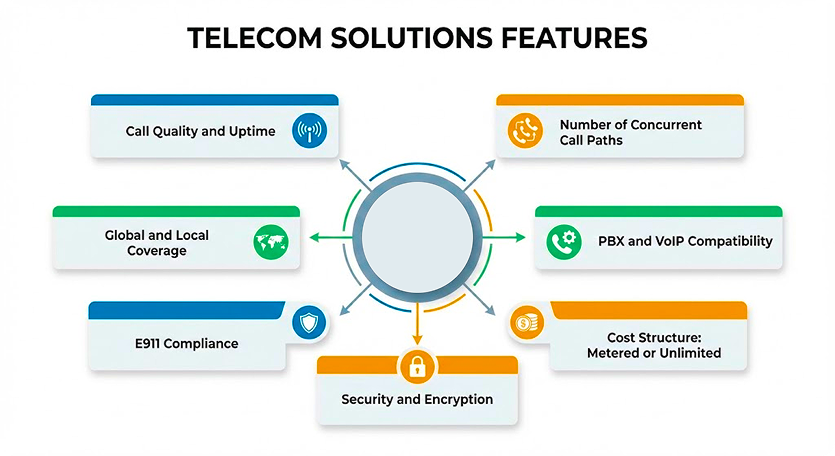
Call Quality and Uptime
A reliable provider must offer consistent call clarity and a stable connection. Services offering redundant networks, HD voice, and strong uptime are primarily preferred in business setups. Moreover, it ensures smooth business communication.
Number of Concurrent Call Paths
Efficient communication is supported by sufficient call capacity. Quick adjustment of active lines is allowed by the scalable provider to meet daily or seasonal needs. Moreover, it maintains uninterrupted and quality performance with no extra charges.
Global and Local Coverage
Broad network coverage supports seamless communication across offices and countries. Providers that offer both international reach and local numbers ensure quality connections. They also help maintain compliance and consistent accessibility for teams and customers in various locations.
PBX and VoIP Compatibility
When compatible with existing PBX or VoIP systems, deployment becomes simpler. Integration that is seamless minimizes setup time, avoids extra hardware costs, and provides a stable voice environment compatible with both modern and legacy systems.
E911 Compliance
Accurate emergency location support is necessary for different organizations. Providers meeting E911 standards ensure quick routing of emergency calls with precise caller details. Moreover, it maintains employee safety and compliance with efficient communication regulations in different operational regions.
Security and Encryption
Business communications are protected from external threats by reliable encryption. Providers using TLS and SRTP protocols secure voice traffic. Moreover, authentication controls and network monitoring strengthen overall communication safety and confidentiality.
Cost Structure: Metered or Unlimited
Balanced pricing ensures value and predictability. Lower call volumes are benefited by metered plans, while unlimited options benefit consistent usage. Therefore, transparent pricing supports the financial management of the business without compromising service reliability
Best SIP Trunking for Specific Use Cases
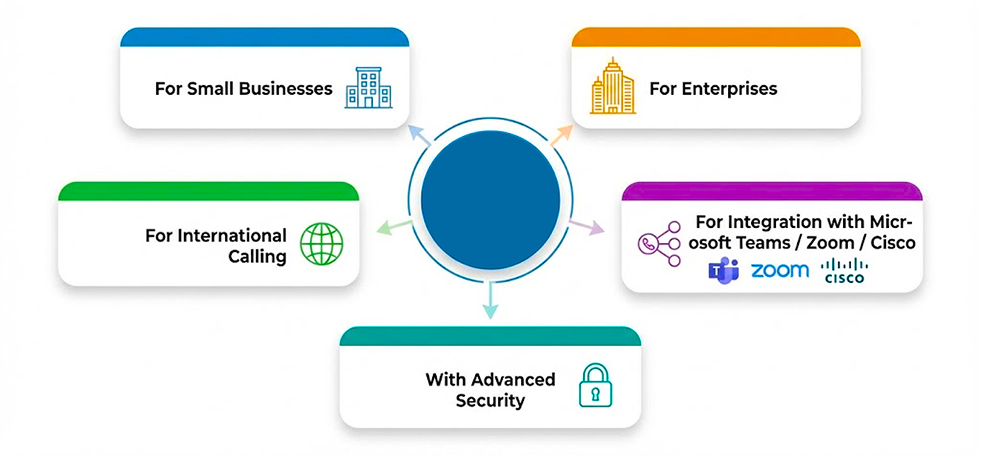
For Small Businesses
Small businesses benefit from SIP trunking that offers predictable pricing and easy setup. Various providers deliver reliable service, simple management, and strong support. It mainly includes Nextiva and SIP.US. These options help reduce communication costs while maintaining professional call quality and local presence.
For Enterprises
Enterprises require SIP trunking with high scalability, compliance, and global reliability. Extensive capacity, redundancy, and analytics are provided by Bandwidth and 8×8 to manage heavy call volumes. They ensure consistent performance across regions while supporting regulatory and data management requirements.
For International Calling
Companies handling global communication need low-latency, international SIP trunks. Worldwide coverage, intelligent routing, and clear billing are provided by Twilio, Plivo, and Telnyx. These features facilitate seamless international calls and optimize costs for businesses connecting with customers or partners across various regions.
For Integration with Microsoft Teams / Zoom / Cisco
Businesses using collaboration tools need SIP trunks that connect directly to Teams, Zoom, or Cisco platforms. RingCentral and Twilio provide certified integrations that ensure seamless voice connectivity, central management, and improved call performance within unified communication environments.
With Advanced Security
Security-focused SIP trunking is essential for industries handling sensitive data. Multiple providers, such as Telnyx and Flowroute, use TLS and SRTP encryption, call authentication, and fraud detection. These features protect call traffic and prevent breaches. Furthermore, it ensures communication integrity and compliance with security standards.
SIP Trunking Pricing Models
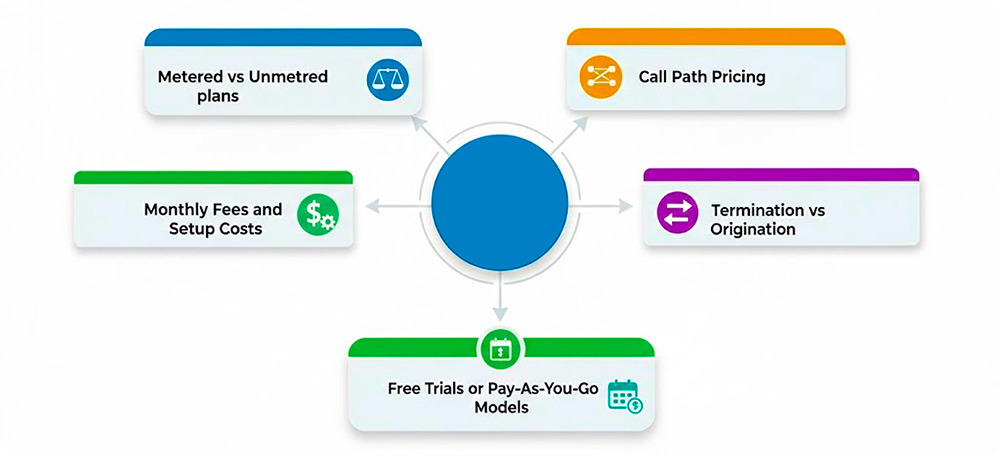
Metered vs Unmetered plans
Metered pricing bills each minute of usage, making it suitable for businesses with fluctuating call traffic. Unmetered plans provide unlimited minutes at a fixed monthly rate, giving predictable costs and better value for companies that handle continuous or high-volume communication
Call Path Pricing
Call path pricing is based on the number of concurrent calls attended by a company instead of billing on total minutes. It suits organizations with fluctuating call volumes that need steady capacity without unexpected costs from varying call durations.
Monthly Fees and Setup Costs
Most providers charge monthly per channel or per user. Some may also apply one-time setup or number porting fees. Reviewing these in advance helps companies plan realistic budgets and avoid unplanned installation or activation costs.
Termination vs Origination
Pricing often separates outbound (termination) and inbound (origination) calls. Rates can differ depending on the country or network. This information supports businesses to calculate the total cost precisely and select the provider aligned with their regional communication needs and budget.
Free Trials or Pay-As-You-Go Models
Several providers offer trial credits or pay-as-you-go plans, allowing companies to test call quality and reliability before committing to long-term use. They help verify performance and cost effectiveness without financial commitment at the start.
Verdict
Which SIP Trunking Should You Choose?
Choosing the right SIP trunking provider depends on your communication scale and operational goals. Additionally, it also involves the pricing and offered features. Nextiva is ideal for small and mid-sized businesses seeking consistent call quality and transparent pricing. It provides reliable uptime and an easy setup process that supports daily operations without technical complexity.
Twilio suits organizations that need customization and control. Its programmable API enables flexible call routing and smooth integration with business applications. This makes it a strong choice for teams focused on automation and workflow efficiency.
For enterprises managing large or international networks, Vonage provides the best scalability and coverage. It ensures stable connections across regions and includes strong routing and security controls.
If you are unable to decide the perfect SIP Trunk solution for your business, you can talk to Voxtium’s vetted telecom advisors who have the best knowledge about the SIP trunk and can help you find the perfect solutions according to your specific needs.